First-year Facility Management students stepped into someone else's reality and discovered that truly inclusive buildings require more than good intentions.
Education
Expertise
Industry
News
Feeling what you cannot see
What happens when you close your eyes and try to navigate a building? Or when you experience space from a wheelchair for the first time? For first-year Facility Management students, these questions became very real during the 9-week block Organisational Dynamics.
Lecturer Sanne Ouwendijk describes how a powerful workshop set the tone. "Students heard directly from a person who has visual impairment and from someone who uses a wheelchair. They talked about the barriers they encounter not just in buildings, but in everyday life, from using public transport to playing sports." The impact was immediate. "All students listened in complete silence. It was truly inspiring."
Sweaty hands and eye-opening moments
After listening, students experienced these realities themselves. Blindfolded and navigating without sight, some had sweaty hands. Others maneuvered through corridors in a wheelchair. Then came the analytical part: students examined sections of the BUas building and quickly discovered that certain features simply do not work for people with a disability or functional limitation.
"Things you walk past every day without thinking suddenly become obstacles," Ouwendijk explains. "A door that is too heavy, a sign you cannot read, a route that simply does not exist if you use a wheelchair. Our students saw it all with fresh eyes."
Beyond what we consider standard needs
This is exactly what Facility Management education at BUas aims to achieve. Future facility professionals need to look beyond what is often assumed to be the norm. Designing inclusive spaces means understanding that people experience buildings in fundamentally different ways and that good facility management adapts services, spaces and policies accordingly.
"We believe it is essential that our students learn how to adapt both the building environment and FM and HR services to a truly inclusive group of people," says Ouwendijk. "It is about looking beyond what we tend to see as standard needs."
Learning from the field: the Dutch Tax Authority
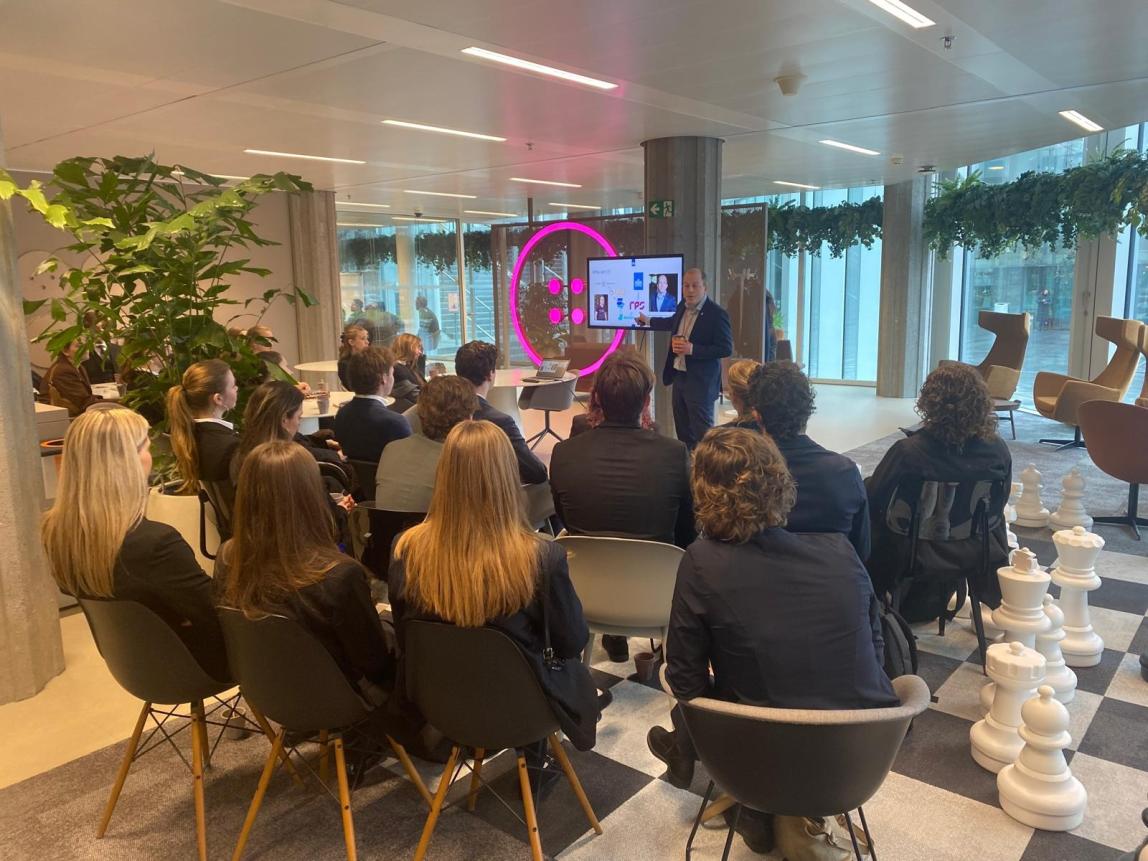
During this block students also visited Dutch Tax Authority (Belastingdienst) in Utrecht, where BUas alumnus Wouter Nuijten shared how the organisation supports its employees to feel physically, mentally and socially healthy. Students received a tour of the building and learned firsthand how inclusive facility management works in practice, from workspace design to wellbeing policy.
Shaping professionals who shape a better world
At BUas, creating meaningful experiences means preparing students to build environments where everyone can participate. By combining lived experience, hands-on exercises and real-world visits, the Facility Management programme ensures that inclusion is not just a topic in the curriculum, it is a way of thinking that students carry into their careers.